People often look at my photographs and ask, “How on earth did you get the dog to do that?”
It's a fair question. When you see a dog sitting beautifully under studio lights, looking directly into the camera with their ears perfectly positioned and an expression that could sell a thousand dog biscuits, it's easy to assume there's been some extraordinary obedience training involved.
The reality is usually a little less glamorous. There may have been cheese, some rather questionable noises and two grown adults negotiating with an animal who has absolutely no idea they're creating fine art.
But there is a method to the madness.
Getting dogs to pose for photographs isn't really about making them do complicated things. It's about understanding how they move, what motivates them and how to bring all those little elements together at exactly the right moment.
And knowing when to press the shutter helps too.
A good pose starts with understanding the dog
Before I start thinking about how I want a dog to look in a photograph, I need to understand how that particular dog naturally behaves.
Different breeds have different physical characteristics, but even within the same breed, personalities can be wildly different. One Labrador might sit beautifully and stare at me with the intensity of someone waiting for their dinner, while another has the attention span of a goldfish and an overwhelming desire to investigate everything in the room.
Neither is necessarily easier to photograph. They just require different approaches.
I've spent more than 26 years working with animals, and one thing I've learnt is that you get much better results when you stop expecting every dog to respond in exactly the same way.
I pay attention to how a dog naturally stands, sits and carries themselves. Some dogs have a lovely upright posture, while others are much more relaxed. Certain poses suit particular body shapes, and sometimes a tiny adjustment to the way a dog is positioned can make an enormous difference to the finished photograph.
The aim is to create something that looks natural and flattering, even if there was quite a bit of work involved in getting there.
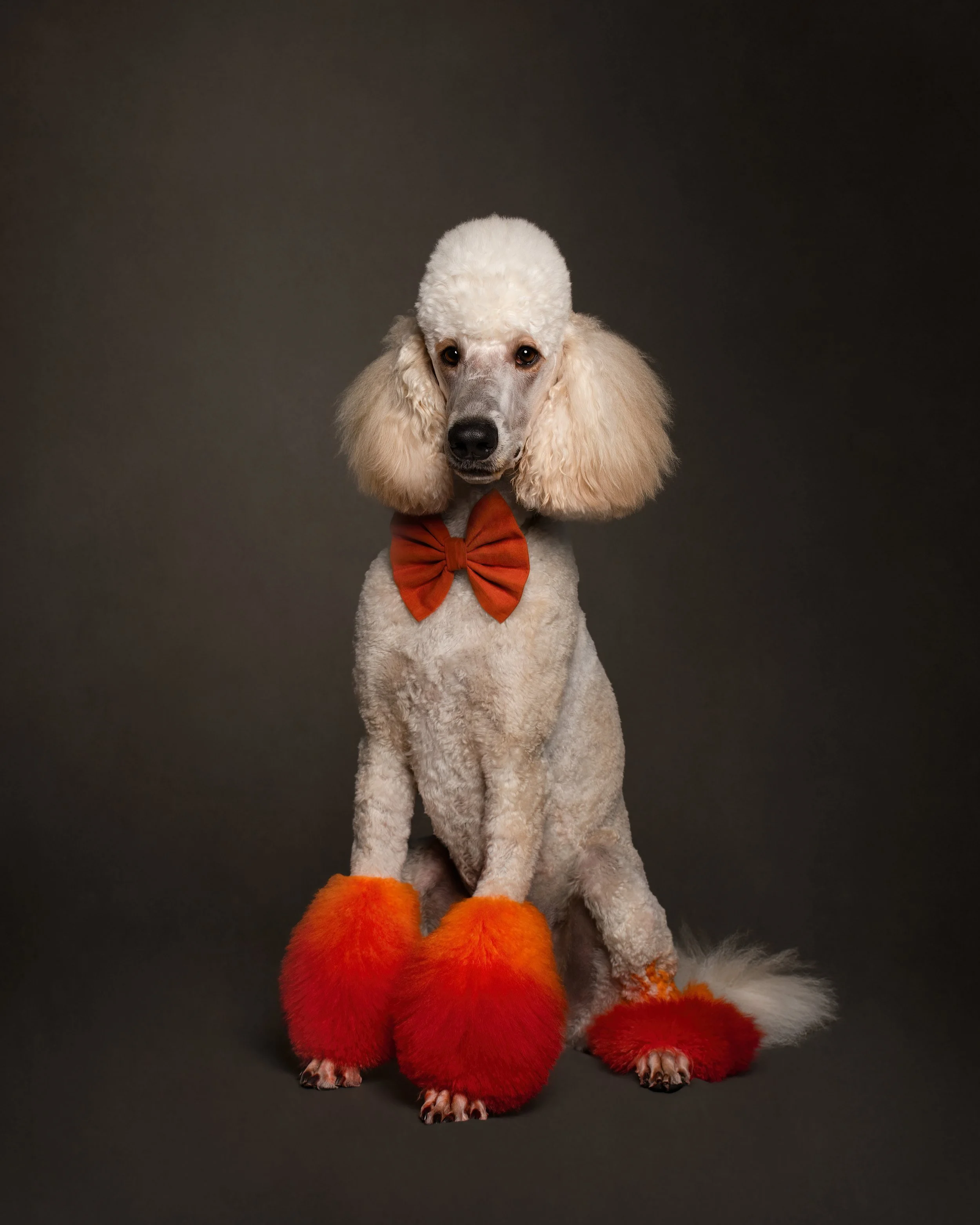
Calcifer
It's not just where the dog sits. It's how they sit.
One of the biggest differences between a casual snapshot and a carefully crafted studio portrait is the attention paid to positioning.
A dog might be sitting exactly where I want them, but that doesn't necessarily mean they're sitting in a way that photographs well.
Perhaps their front legs are uneven, making their shoulders look awkward. Maybe their weight is shifted to one side, or their back legs have somehow disappeared beneath them. Some dogs sit beautifully upright, while others immediately collapse into what I can only describe as a furry puddle.
The position of the head matters too. A slight turn can completely change the shape of a dog's face, and the angle of the camera can either flatter their proportions or make their nose look approximately three times its actual size.
I also think about where the paws are positioned, how the body creates shape and whether the pose allows the dog's best features to shine.
These might sound like tiny details, but they're often what separates a nice photograph from one that really makes you stop and look.
Of course, the dog isn't particularly interested in any of this. They're usually wondering when the next snack is arriving.
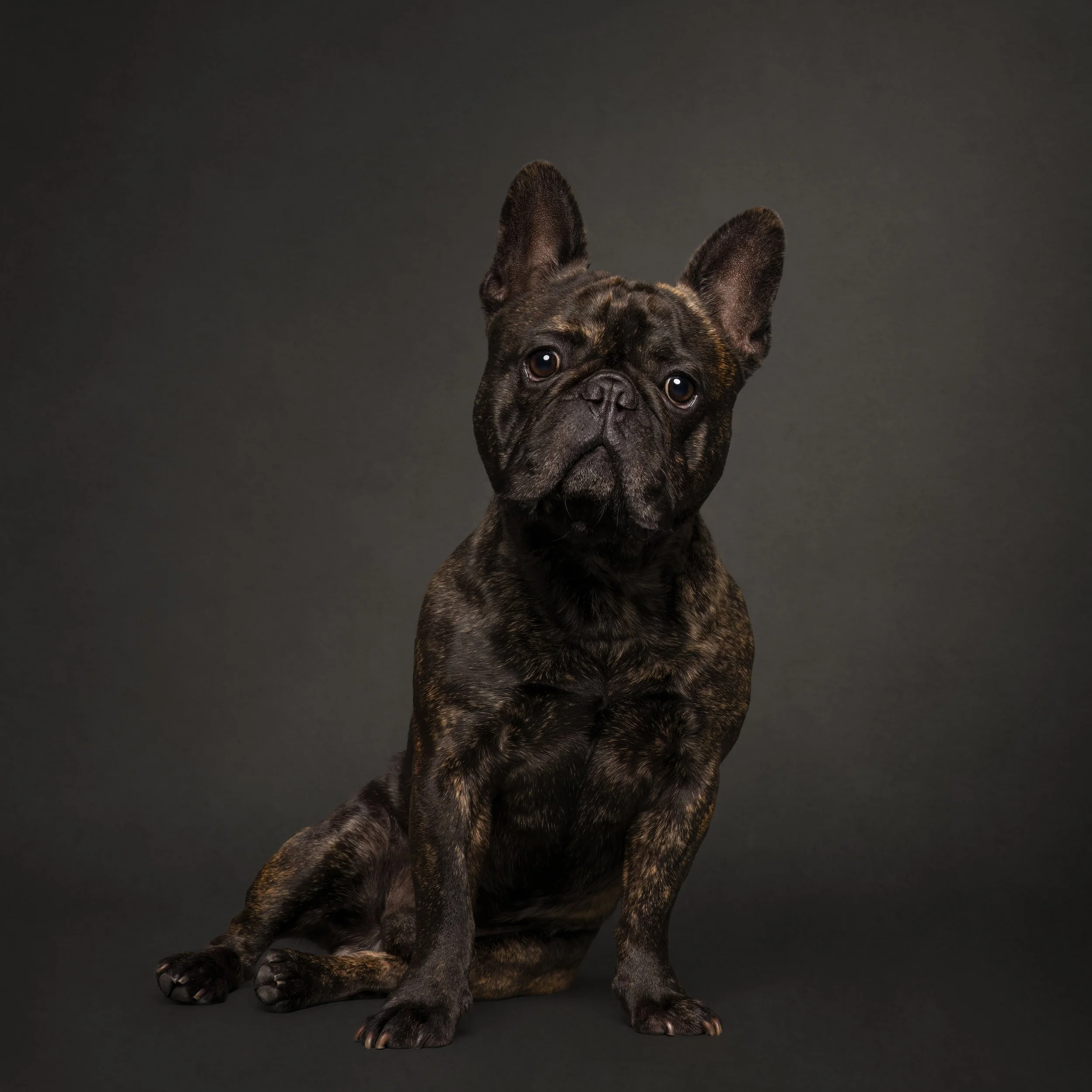
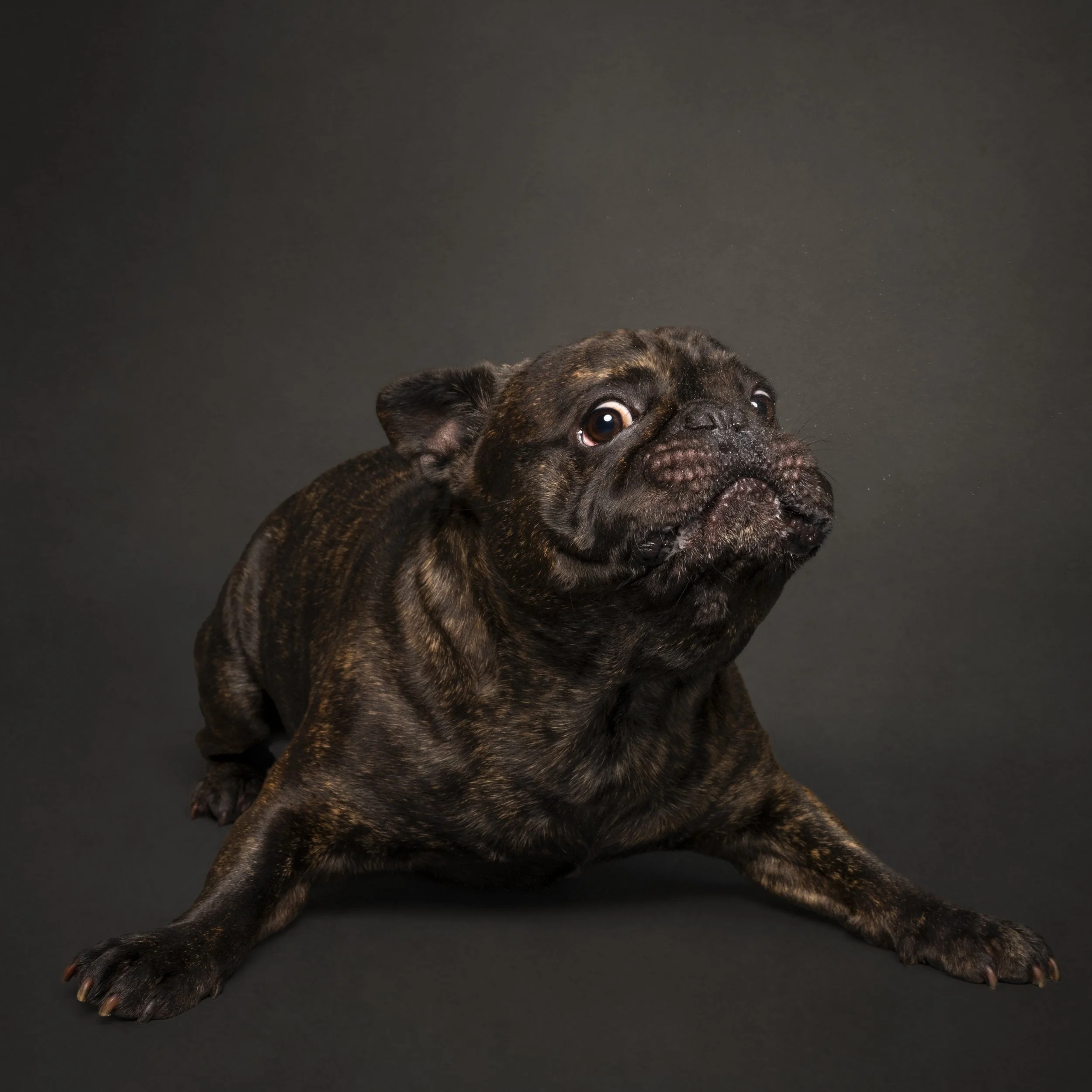
Nacho shows us how he went from supermodel to clown in a split second.
The secret to those perfectly positioned ears
Ears can make or break a dog portrait.
They're one of the most expressive parts of a dog's face, and a tiny change in their position can completely alter the mood of a photograph.
Think about a German Shepherd with those magnificent upright ears, or a spaniel whose ears frame their face. Even dogs with floppy ears have subtle changes in expression that make an enormous difference.
Getting those ears into the right position is often about directing the dog's attention.
A particular noise might make them curious enough to lift their ears. A toy moving just outside the frame might give us exactly the head position we're looking for. Sometimes it's as simple as saying a word the dog recognises.
I've made some truly ridiculous noises over the years, and I'm fairly certain that if someone recorded an entire photography session without the accompanying video, they'd have serious concerns about my wellbeing.
But if it gets the expression I'm looking for, I'll happily sacrifice a little dignity.
The trick is knowing which sound to use and when. Make the same noise repeatedly and most dogs will eventually decide you're an idiot and stop responding. You need to keep things interesting without overwhelming them.
And when those ears finally do exactly what I want, I need to be ready.
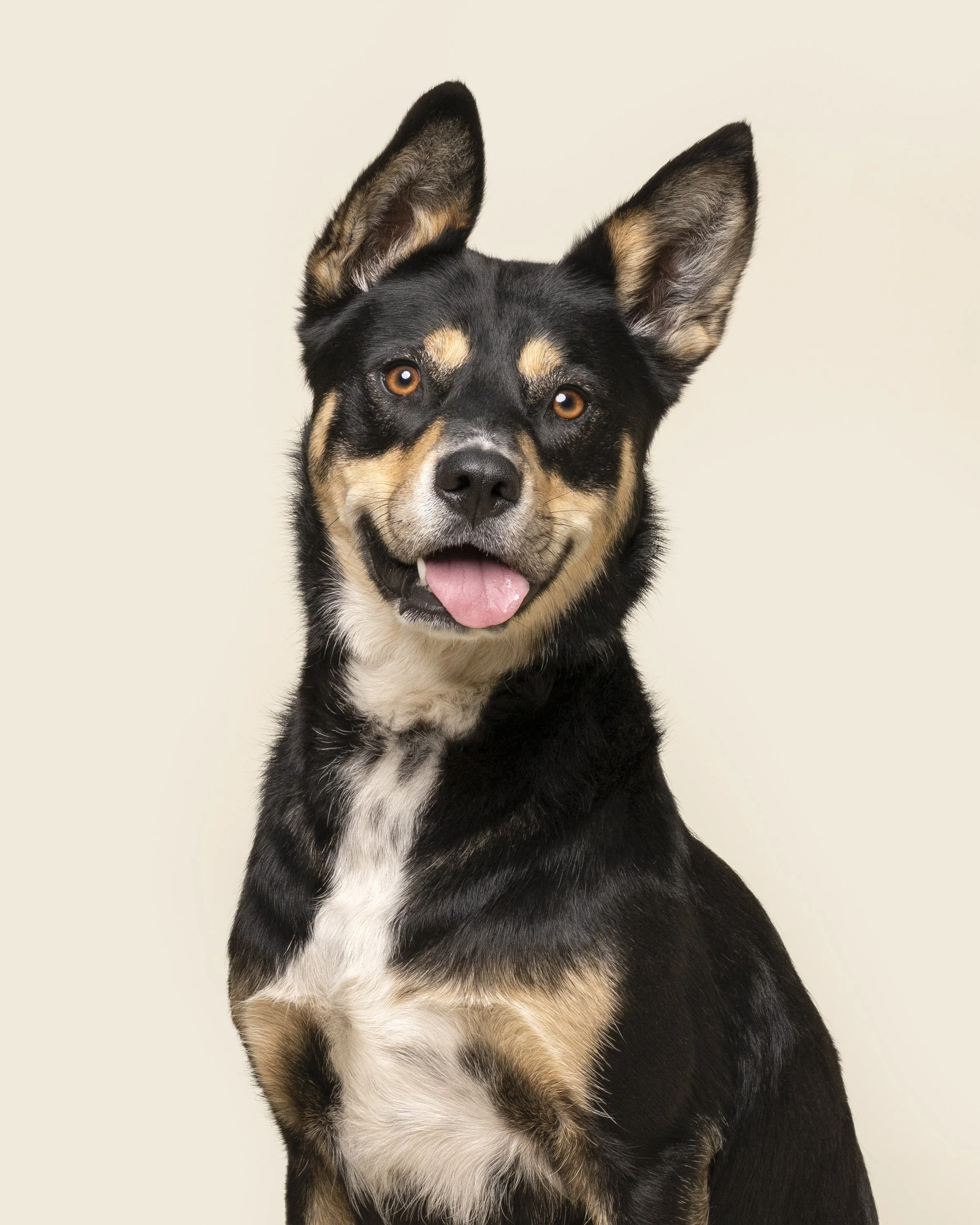
Lexi shows us how important her ears are!
Timing is everything
This is where experience behind the camera becomes just as important as experience with animals.
Dogs are constantly moving, even when they appear to be sitting still. Their eyes shift, their ears move, their mouths open and close, and their expressions can change in a fraction of a second.
I might spend a couple of minutes working towards a particular pose, but the actual photograph happens in an instant.
Sometimes it's the split second when a dog hears something interesting and lifts their head. Other times it's the moment just before they move, when their posture is perfect and their expression is beautifully alert.
I'm watching for those moments rather than simply taking photographs and hoping something works.
It also means I need to understand what the dog is likely to do next. If I can anticipate a movement or expression, I have a much better chance of capturing it than if I'm constantly reacting after it happens.
The finished photograph might look wonderfully calm and effortless, but what happened immediately before and after it could tell a very different story.
That's one of the things I love most about photographing animals. There's always an element of unpredictability, and sometimes those unexpected moments turn out to be the best photographs of the day.
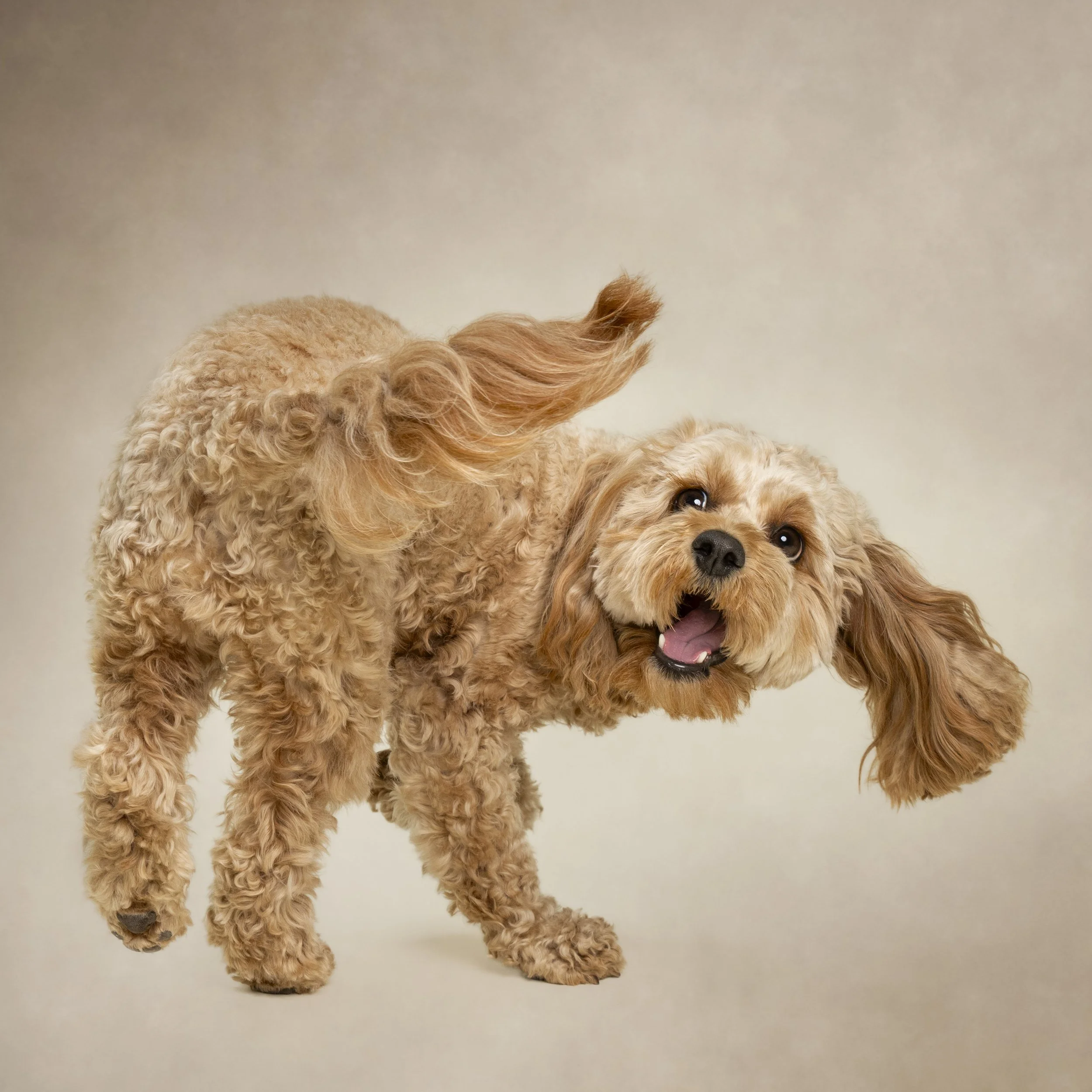
I caught this moment of Luna while Tony was playing with her in between poses.
Why having an animal handler makes such a difference
One of the most valuable things I have in the studio isn't a camera or a light. It's another pair of hands belonging to someone who understands animals.
I work alongside an experienced animal handler during photography sessions, and that allows us to concentrate on different parts of the process without constantly interrupting one another.
While I'm looking at composition, lighting and expression through the camera, my handler can help position the dog, manage rewards and direct their attention.
This is particularly useful when we're trying to achieve a very specific pose. A small adjustment to where a dog is sitting or the direction they're looking can make all the difference, and having someone who understands what I'm trying to create makes the process much smoother.
It also means we can pay proper attention to the dog's comfort and behaviour throughout the session.
There's a surprising amount of coordination involved. Sometimes it feels like a carefully choreographed performance, except one of the performers hasn't read the script and keeps wandering off to sniff the curtains.
Fortunately, we're quite used to improvising.
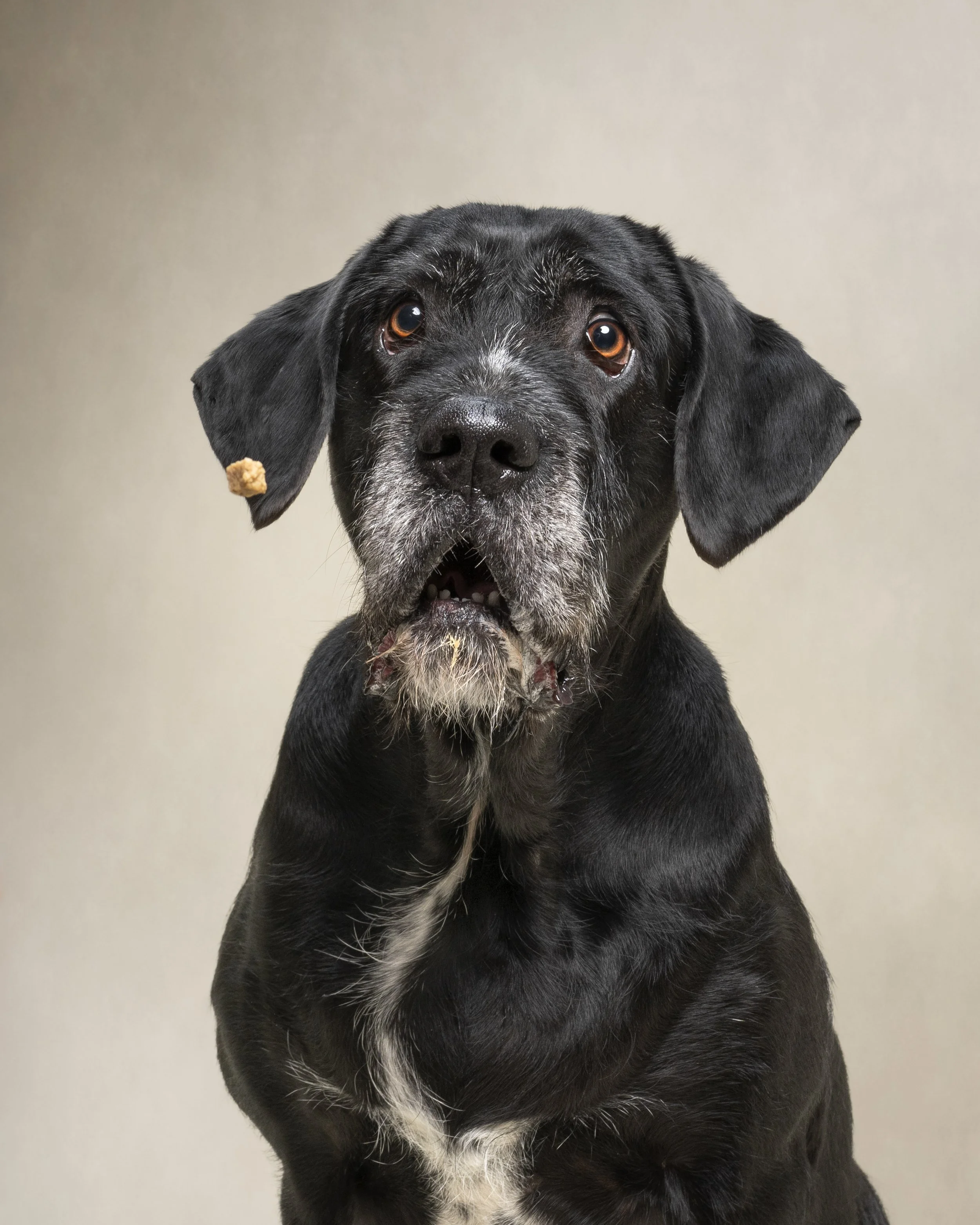
Zayder nails her catch shot!
Lighting is part of the pose too
This is something people don't always consider when they look at a dog portrait.
Positioning and expression are important, but the way light falls across the animal has an enormous influence on the finished image.
A small change in the angle of a dog's head can alter the shadows around their eyes, change how their coat catches the light or bring out details in their face that might otherwise be lost.
With dark coloured dogs, for example, I'm often paying particular attention to how the light defines the shape of their face and body. With long or textured coats, lighting can help bring out the beautiful detail in the fur.
I don't necessarily want the dog to move very far. Sometimes all I need is a slight turn of the head or a tiny adjustment to their position to get the light doing exactly what I want.
And while the dog is probably thinking we're making an extraordinary fuss over absolutely nothing, those little refinements are what help give the final artwork its depth and dimension.
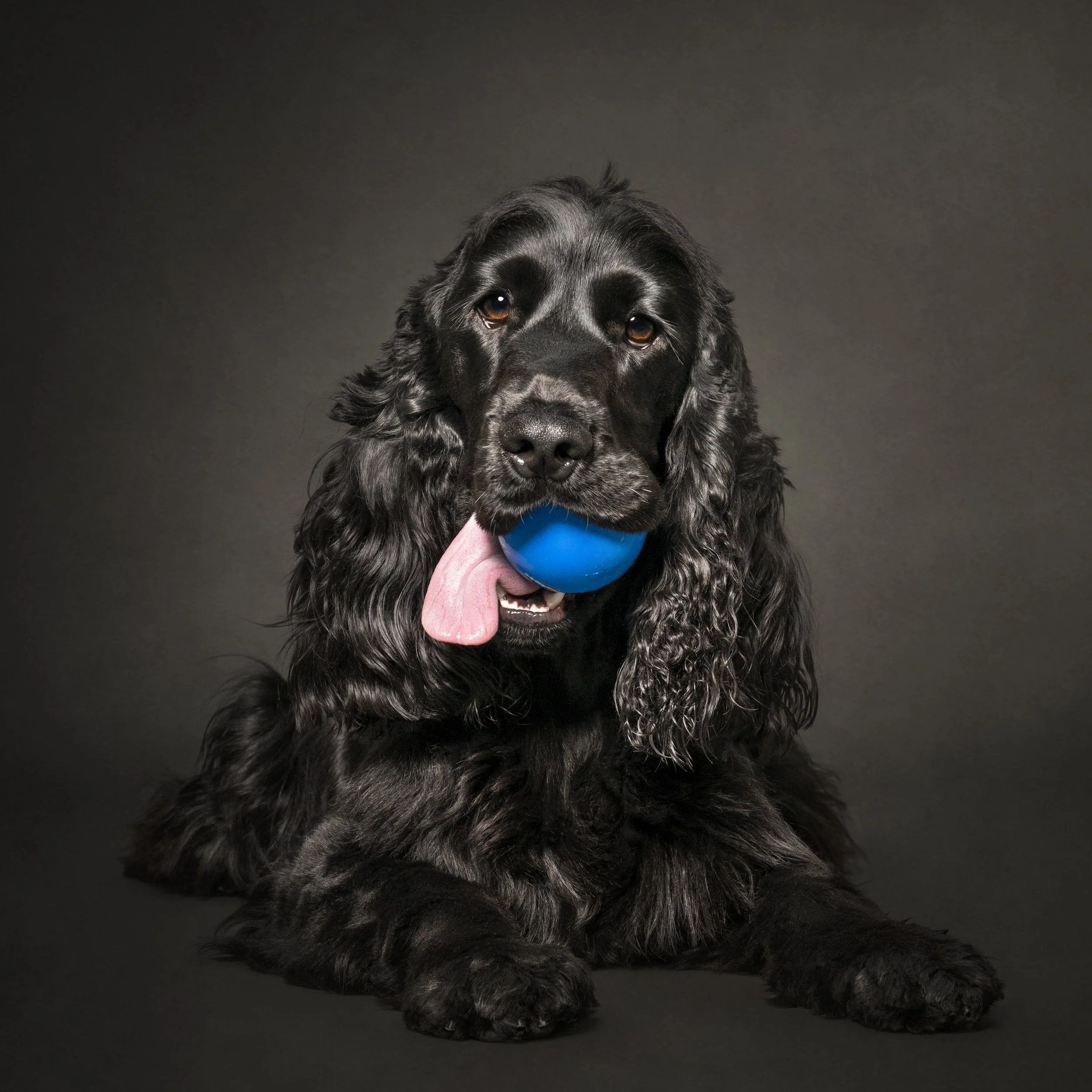
Gus
Sometimes the best pose isn't a pose at all
For all the planning that goes into my photography, some of my favourite images have come from moments that weren't particularly planned.
A dog might offer a wonderfully ridiculous expression while we're trying to achieve something completely different. They might sit in an unexpected way that turns out to suit their personality perfectly, or give me a look that their owner immediately recognises.
I think it's important to leave room for those moments.
After all, there's not much point creating a technically perfect portrait if it doesn't feel like the animal we're photographing.
Some dogs are elegant and dignified. Others are complete clowns. Some manage to be both within approximately four seconds.
I want the finished photographs to reflect that individuality rather than making every dog look like they've graduated from the same modelling school.
It's also why I don't go into every session with an inflexible list of poses that absolutely must be achieved. I'll have ideas, of course, but the dog always gets a say in how things unfold.
Whether I agree with their artistic direction is another matter entirely.

Edsel shows off his signature cat pose
What does all this mean for your dog?
If you've been looking at professional pet portraits and wondering whether your dog could ever sit beautifully enough to have photographs like these, I hope this gives you a better idea of what's happening behind the scenes.
Those photographs aren't simply the result of a dog being exceptionally obedient. They're the result of careful positioning, understanding animal behaviour, good lighting, patience, teamwork and knowing how to capture the right moment.
And yes, occasionally a truly ridiculous noise.
When you bring your dog to Frog Dog Studios, you're not expected to arrive with a perfectly polished canine model. We'll get to know your dog, work out what suits them and create photographs that show off their individual personality.
You get to sit back and enjoy watching the whole thing unfold, which is often an entertaining experience in itself.
Because while I might be thinking about composition, lighting and the exact angle of your dog's head, your dog is probably thinking about cheese.
And somehow, between the two of us, we make art.
Ready to see your dog in the spotlight?
Every Frog Dog photography experience begins with an in studio consultation at our Brooklyn studio in Melbourne. It's an opportunity for me to meet your dog, learn about their personality and talk about the artwork you'd love to create.
You don't need to know which poses you want or how we're going to achieve them. That's my department.
Your dog just needs to bring their personality. And perhaps an appetite.
I can’t wait to meet you!